Natuna Regency is one of Indonesia’s strategic regions, both geographically and geopolitically. As a border area, its community is naturally exposed to potential ideological shifts due to its close proximity to neighboring cultures with similar characteristics.
Therefore, efforts to uphold the Pancasila ideology as the foundation of thought and behavior in society, nationhood, and statehood are an absolute necessity.
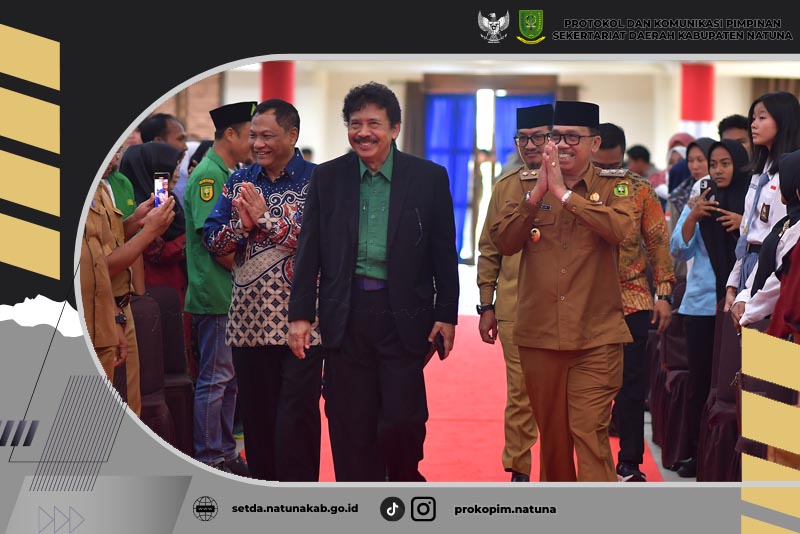
This was conveyed by Vice Regent of Natuna, Jarmin, during his speech at the Pancasila Ideology Development Program for Society, themed “Transformation of Pancasila Values as a Pillar of the Unitary State of the Republic of Indonesia (NKRI) in Border Areas”, held at Sri Serindit Multipurpose Hall, Ranai, on Tuesday morning (July 15).
Jarmin emphasized the importance of cultivating national ideals within every individual, especially in border areas. In this regard, the Pancasila Ideology Development Agency (BPIP) plays a vital role in preparing communities to face future challenges.
He expressed hope that through this program, the people of Natuna Regency would gain the knowledge, understanding, and insight needed to interpret and apply the noble values of Pancasila as a reflection of national identity and integrity.
At the same event, Prakoso, Deputy for Inter-Institutional Relations, Socialization, Communication, and Networking at BPIP, explained that Pancasila should not be seen merely as a slogan or motto, but must be genuinely practiced in daily life by all Indonesian citizens.
This activity represents the government’s commitment to grounding Pancasila values, while also raising public awareness of the importance of safeguarding the unity of the Republic of Indonesia (NKRI). A strong ideology is considered a fundamental asset in building a dignified and resilient nation.
Prakoso also called on all Natuna residents to be pioneers and role models in promoting Pancasila values—making mutual cooperation a cultural norm, deliberation the means for resolving issues, and diversity a strength rather than a weakness.
He also extended his gratitude to all parties involved in organizing the event and expressed hope that it would contribute positively to strengthening national character, fostering inclusivity, and reinforcing ideological resilience in Indonesia’s border regions.
The event was attended by the Regional Secretary, members of the Regional Leadership Coordination Forum (Forkopimda), heads of local government agencies, leaders of several organizations, community leaders, sub-district and village heads, and representatives from academia (students). (Pro_kopim/D&S)