The Government of Natuna Regency continues to implement strategic measures to strengthen regional fiscal conditions while promoting more sustainable economic growth. These efforts include improving regional financial management, particularly through the settlement of outstanding obligations to third parties.
The Regent of Natuna, Cen Sui Lan, stated that in 2025 the region’s economy showed significant dynamics. Based on data from Badan Pusat Statistik (BPS), Natuna’s economic growth reached 10.49 percent when the oil and gas sector was included in the calculation.
However, when the oil and gas sector is excluded, Natuna’s economy recorded a contraction of 1.61 percent. This difference indicates that the oil and gas industry remains a key pillar of the regional economy, particularly through exploration and production activities that contribute significantly to the formation of the regional Gross Domestic Product.
Despite this, Natuna’s economy is not solely dependent on the oil and gas sector. Several non-oil and gas sectors—such as fisheries, agriculture, trade, services, and construction—also play vital roles in driving the region’s economic activities. In 2025, some of these sectors experienced adjustments influenced by regional fiscal policies.
Regent Cen Sui Lan explained that in 2025 the regional government prioritized the settlement of outstanding obligations to third parties. This policy was implemented in response to efficiency measures taken by the central government, which affected regional fiscal conditions in 2024 and left the regional government with financial obligations amounting to Rp187 billion.
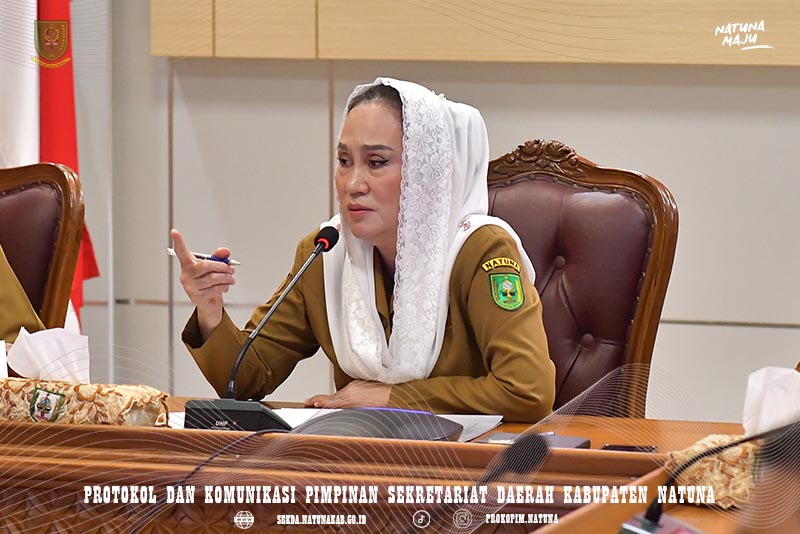
“In accordance with the mandate of existing regulations, the regional government is obliged to settle these debts. So far, we have resolved approximately Rp150 billion, and around Rp37 billion remains, which will be settled by 2026,” the Regent said when met in her office on Friday (March 13).
According to her, resolving these financial obligations is an essential step toward restoring and strengthening the fiscal health of the regional government. With a more stable fiscal condition, the government will have greater flexibility to allocate development budgets and stimulate economic growth more effectively.
On the other hand, this fiscal restructuring policy has also affected the construction sector. The reduction in regional capital expenditure for development investments caused the construction sector to experience a significant contraction in 2025.
In addition, the fisheries sector has also contributed to the slowdown in regional economic growth. This sector is one of the largest contributors to Natuna’s regional economy, accounting for an average of around 30 percent of the regional Gross Domestic Product. In 2025, capture fisheries production declined to approximately 72 thousand tons, compared to 136 thousand tons recorded in 2024.
Looking ahead, the Government of Natuna Regency will continue to strengthen non-oil and gas sectors as a key focus of regional development. This effort will be pursued through the utilization of national strategic programs, optimization of government spending, and increased capture fisheries production through the strengthening of fisheries infrastructure and supporting policies. These measures aim to create a more resilient and sustainable regional economic structure. Prokopim Natuna