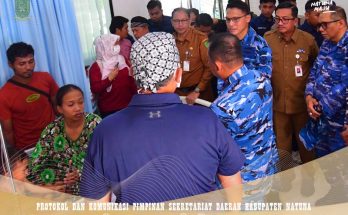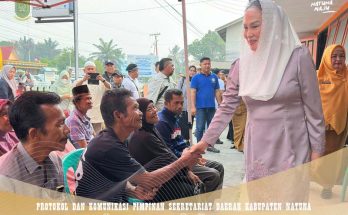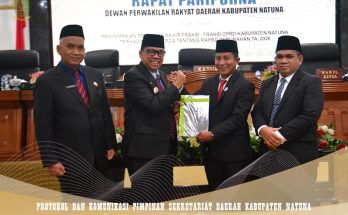
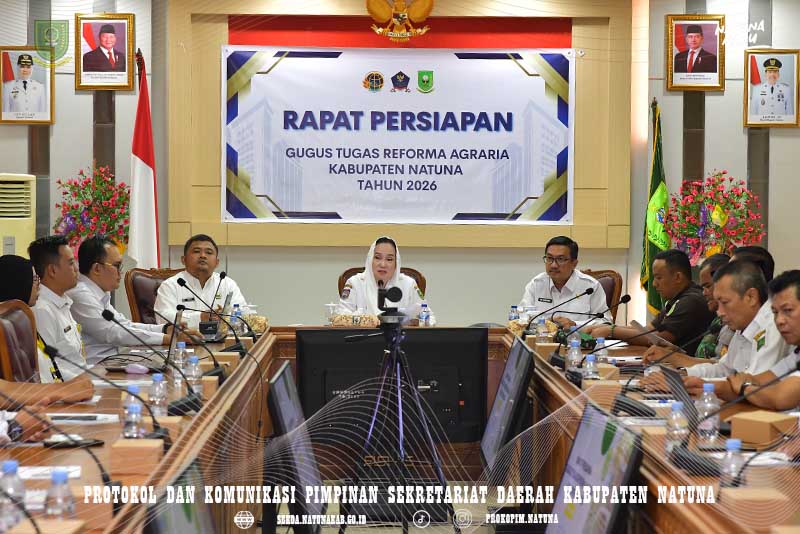
Natuna Regent Cen Sui Lan chaired the preparatory meeting of the 2026 Agrarian Reform Task Force (GTRA) at the Regent’s Office on Wednesday morning (13/05). The meeting brought together members of the Regional Leadership Coordination Forum (FKPD), the Regional Secretary, regional assistants and advisers, heads of government agencies, representatives of the Natuna Land Office, and the Natuna Malay Customary Institution.
In her opening remarks, Cen Sui Lan emphasized that agrarian reform is a key national strategic program aimed at ensuring fair distribution, ownership, use, and utilization of land. She noted that the initiative plays an important role in improving public welfare, reducing social inequality, resolving land-related disputes, and strengthening local economic development.
The Regent explained that, as a border region, Natuna has unique land governance characteristics shaped by specific policies and strategic considerations. She stressed that agrarian reform must be implemented carefully, systematically, and sustainably while balancing community interests, environmental preservation, and regional development goals.
She also called for stronger cross-sector coordination and collaboration among all stakeholders involved. Accurate identification of land beneficiaries and land assets, she said, is essential to ensure that the program delivers meaningful benefits to eligible communities.
During the meeting, Bayu Witopo, represented by the Head of Administration of the Natuna Land Office (BPN), explained that the GTRA program extends beyond land certification and legalization. It also focuses on improving access to economic opportunities, community empowerment, and institutional strengthening to enhance public welfare.
He emphasized that the success of the program depends heavily on commitment and cooperation across sectors. Stakeholders, he said, must work together throughout the implementation process, particularly in activities that directly involve local communities and environmental considerations.
Several GTRA initiatives will be implemented at the village level, including the management of Agrarian Reform Land Objects (TORA) and the development of Agrarian Reform Villages in Natuna. Bayu noted that strong support from local government agencies, partner institutions, and the community will be crucial to the successful implementation of these programs. Prokopim/Endang
RILIS PERS, Number : 0643/PRO_KOPIM/2025